 Cookie preferences



CHEMICAL PEELS

Chemical peels
The chemical peel is a procedure which involves the application of one or more chemicals on the skin, producing an acceleration of cell turnover. The immediate effect is skin exfoliation ( more or less deep), usually visible, and a delayed effect is skin regeneration with repairing of the epidermis and dermal matrix (formation of new collagen ) which improves certain aesthetic defects such as spots, wrinkles , skin tone, color, etc. .
Advantage
- can be done in any season, in any type of skin anywhere on the body (with a suitable choice of peeling)
- It’s quick and easy
- In ambulatory use, generally not requiring hospitalization
- Painless in most cases
- immediate outcome: provides a smoother, brighter and younger looking skin.
Indications
Facial aging due to sun exposure (photoaging ) , fine wrinkles and expression lines, pigmented spots ( age spots , melisma , freckles, ... ) , irregularities of the skin ( acne, keratosis , dry skin, ... ) , sagging skin , stretch marks, scars , open pores ...
The selection of the peeling depends largely on the patient’s skin type, but also impacts other aspects such as the preparation of the skin, sun exposure and expectations. The best candidates for implementing peels are individuals with fair skin, blond hair and blue eyes (low phototype) due to lower risk of hyperpigmentation.
Risks and recommendations
Do not apply retinoic acid or benzoyl peroxide creams the night before. If you miss, talk to your doctor before applying the peel (see peel preparation)
Do not make heavy exercise in the 7 days following application.
Avoid exposure to the sun in 3-7 days, and use adequate sun protection.
Effectiveness
The effectiveness of peeling depends on multiple factors , such as knowledge of the chemical to be used , the characteristics of the skin to treat ( phototype , thickness, ethnic heritage , hypersensitivity ... ) , the formulation of each substance (concentration , pH ... ) , contact time , etc. .
Depending on the depth of the action of the chemical used, the peel can be superficial, medium or deep. A greater depth of action, greater stimulation and skin repair but higher chance of complications.
Information contained on this page not intends to replace the information provided by your doctor individually. If in doubt, your doctor will provide the necessary clarifications. If you are thinking about having a cosmetic procedure, contact a specialist (dermatologist, plastic surgeon).
-
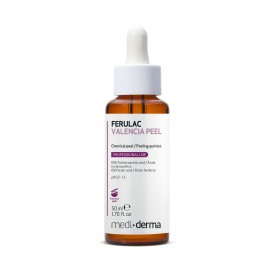
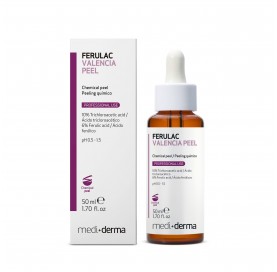
FERULAC VALENCIA PEEL
Chemical peel for photoaging on face, décolleté and hands. 50 ml - pH 0.5 - 1.5 Synergy of a... -


MESO CIT EVEN SKIN TONE...
Needle lubricant for dyschromia and hyperpigmentation. HGH growth factor accelerates the e... -
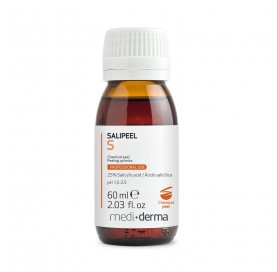
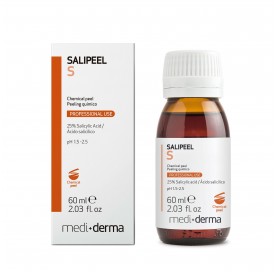
SALIPEEL SOLUTION 60 ML
Chemical peel for oily acne-prone skin and scaly skin conditions. 60 ml - pH 1.5 - 2.5 SA ... -
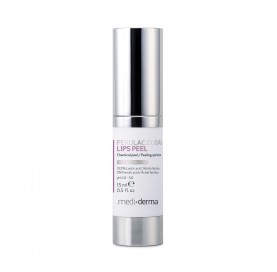
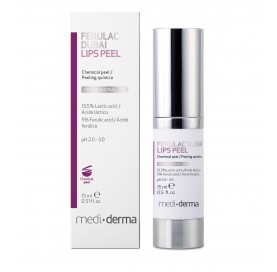
FERULAC DUBAI LIPS PEEL
Chemical peel for hyperpigmentation and lip photoaging. 15 ml - pH 2.0 - 3.0 Lactic acid is... -
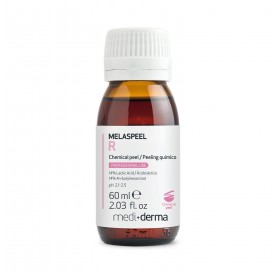
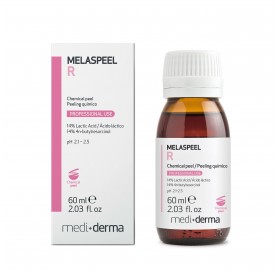
MELASPEEL R 60 ml
Chemical peel for hyperpigmentations. A more potent formulation than MELASPEEL K and KH. Focal a... -

FERULAC CLASSIC 60 ml
Chemical peel for photo-aging. Hyperpigmentations and sun spots. 60 ml - pH 4.0 - 5.0 PROPE... -


DNA RECOVERY PEEL CREAM 15 ml
Sealed cream to be used in combination with DNA Recovery peel Solution, indicated for photoaging... -


MELASPEEL K 60 ml
Chemical peel for hyperpigmentations in higher skin phototypes. Oily skin, skin prone to acne, c... -

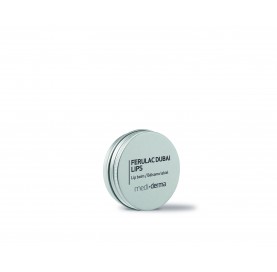
FERULAC LIPS BALM
Indicated for follow-on treatment for hyperpigmentation and photoaging of the lips. 9.2 gr. ... -
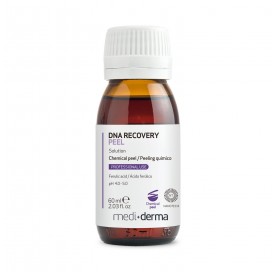
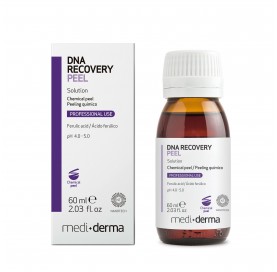
DNA RECOVERY PEEL SOLUTION...
Peel system with liposomal active ingredients which act selectively and effectively on the DNA t... -
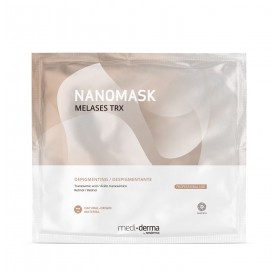

NANOMASK MELASES TRX
Anti-wrinkle facial mask with biocellulose matrix and active ingredients encapsulated in nanosom... -

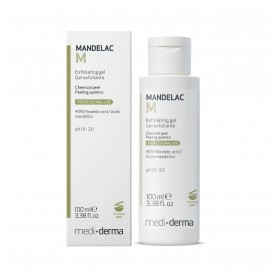
MANDELAC SCRUB GEL 100ML
Chemical peel for aged skins. UUneven pigmentation and blemishes (liver spots, pregnancy, contra...